residential
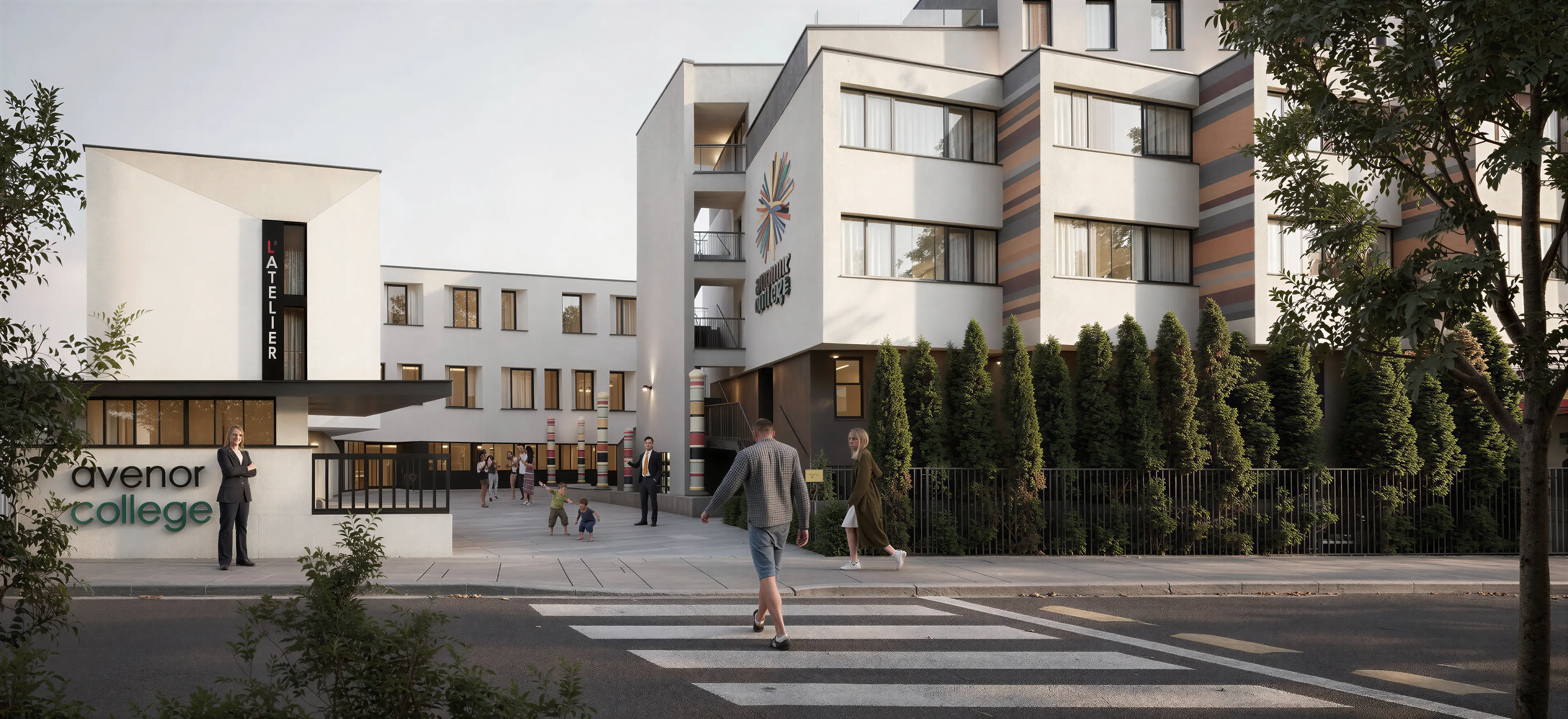
Expressive & Performing Arts Building
Constantin Brancusi, a seminal figure in modern sculpture, profoundly influenced not only the visual arts but also the trajectory of modern architecture. His exploration of pure form, particularly during his OVOID PHASE, marked a radical departure from traditional representation and embraced ABSTRACTION AS A MEANS OF CAPTURING ESSENCE and universality. The ovoid shape, recurring in works such as The Beginning of the World and Sleeping Muse, became a central motif that symbolized infinity, birth, and the continuum of existence. His sculptural ethos—defined by smooth surfaces, organic geometry, and a profound sensitivity to light and volume—echoed through architectural principles that favored simplicity, clarity, and the interplay between form and void. Thus, Brancusi’s sculptural innovations, particularly his ovoid forms, not only redefined artistic expression but also helped shape the language of modern architecture.
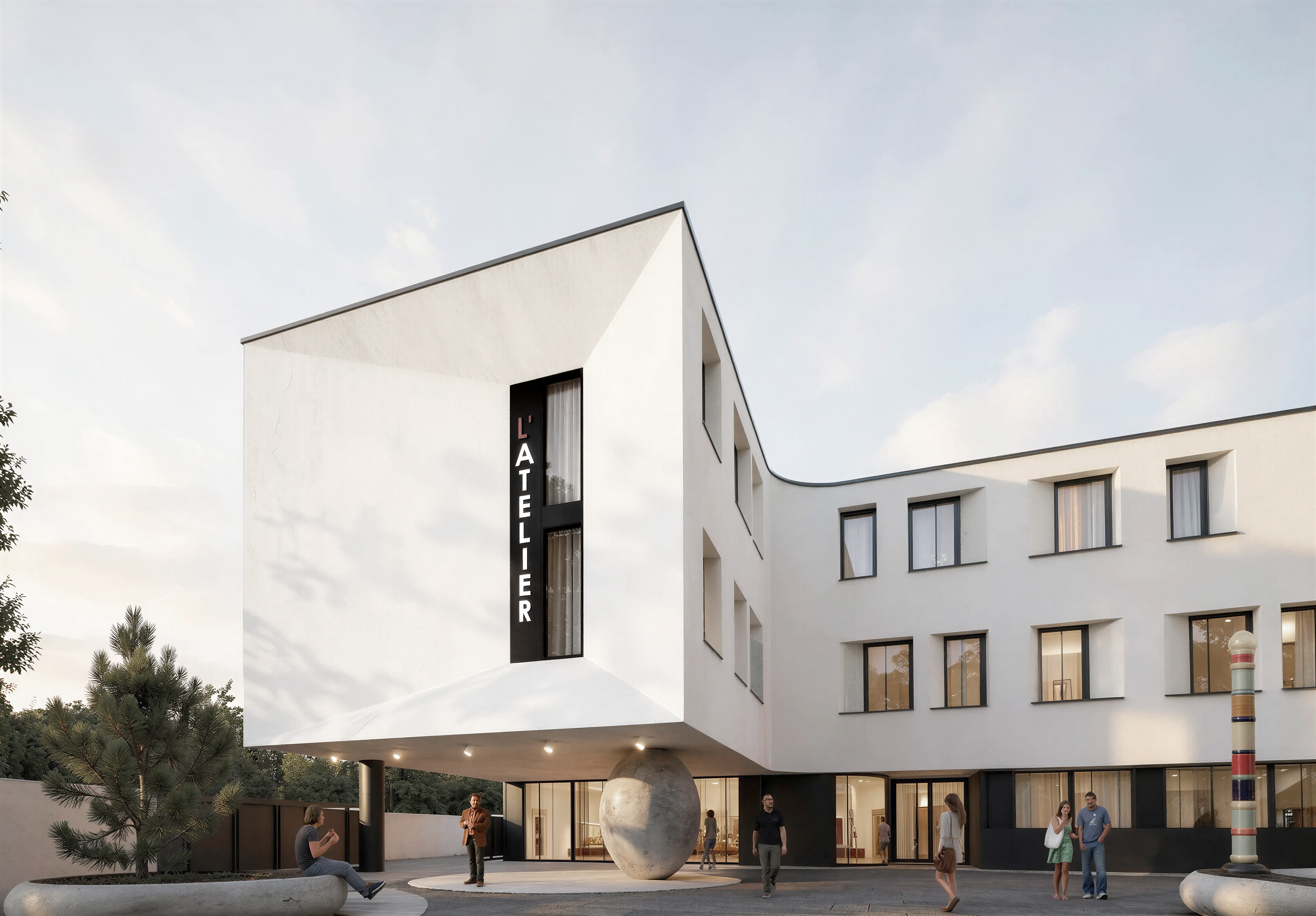
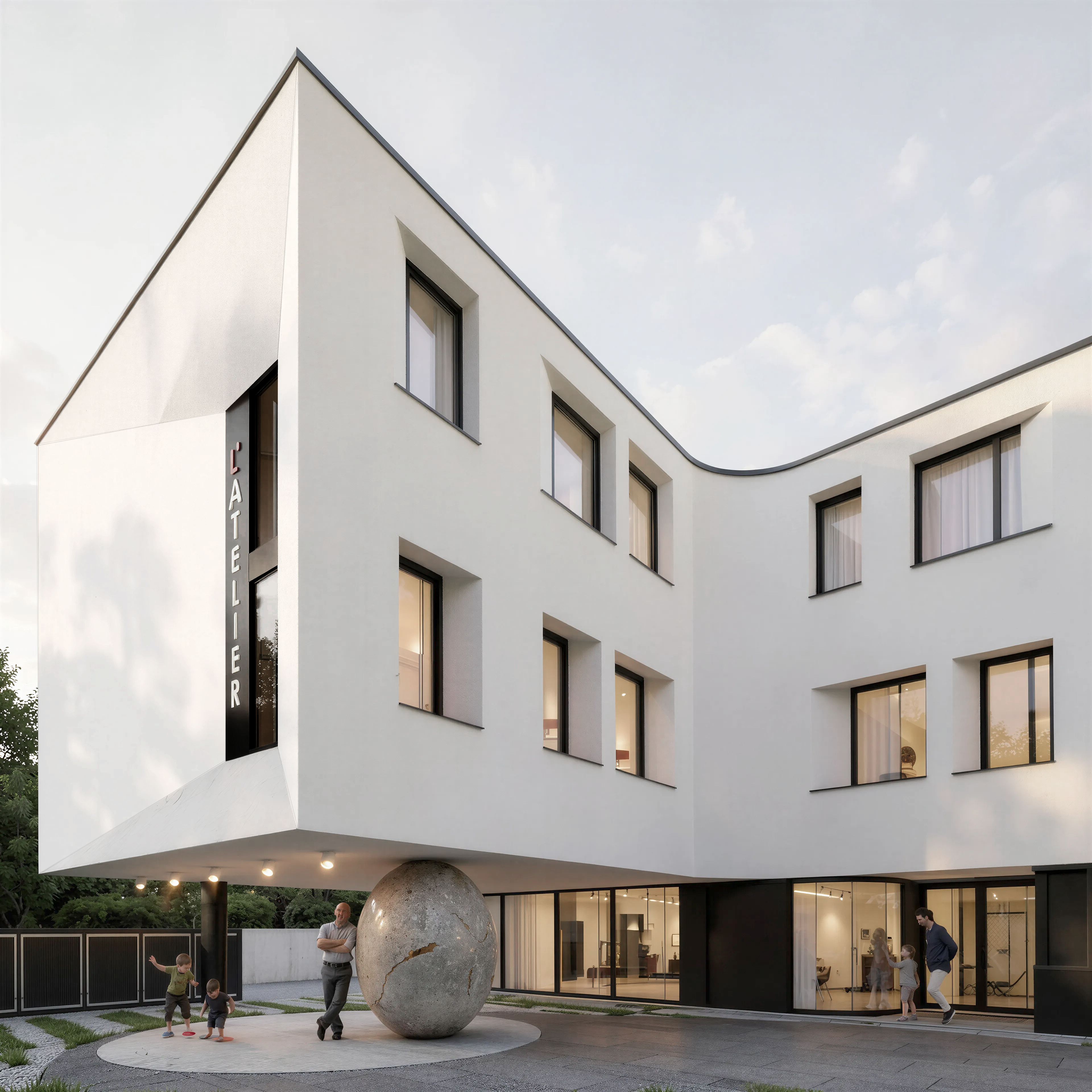
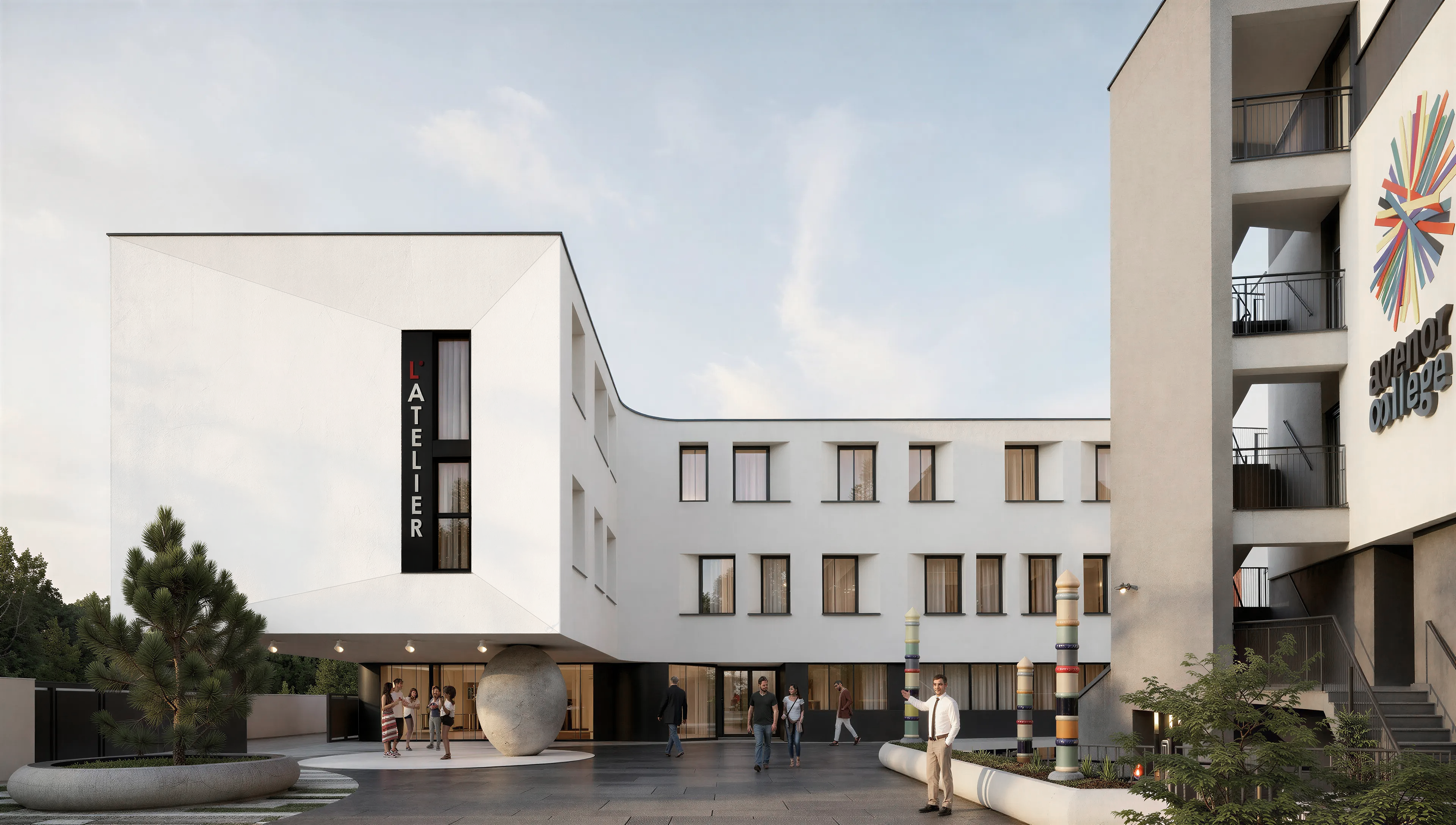
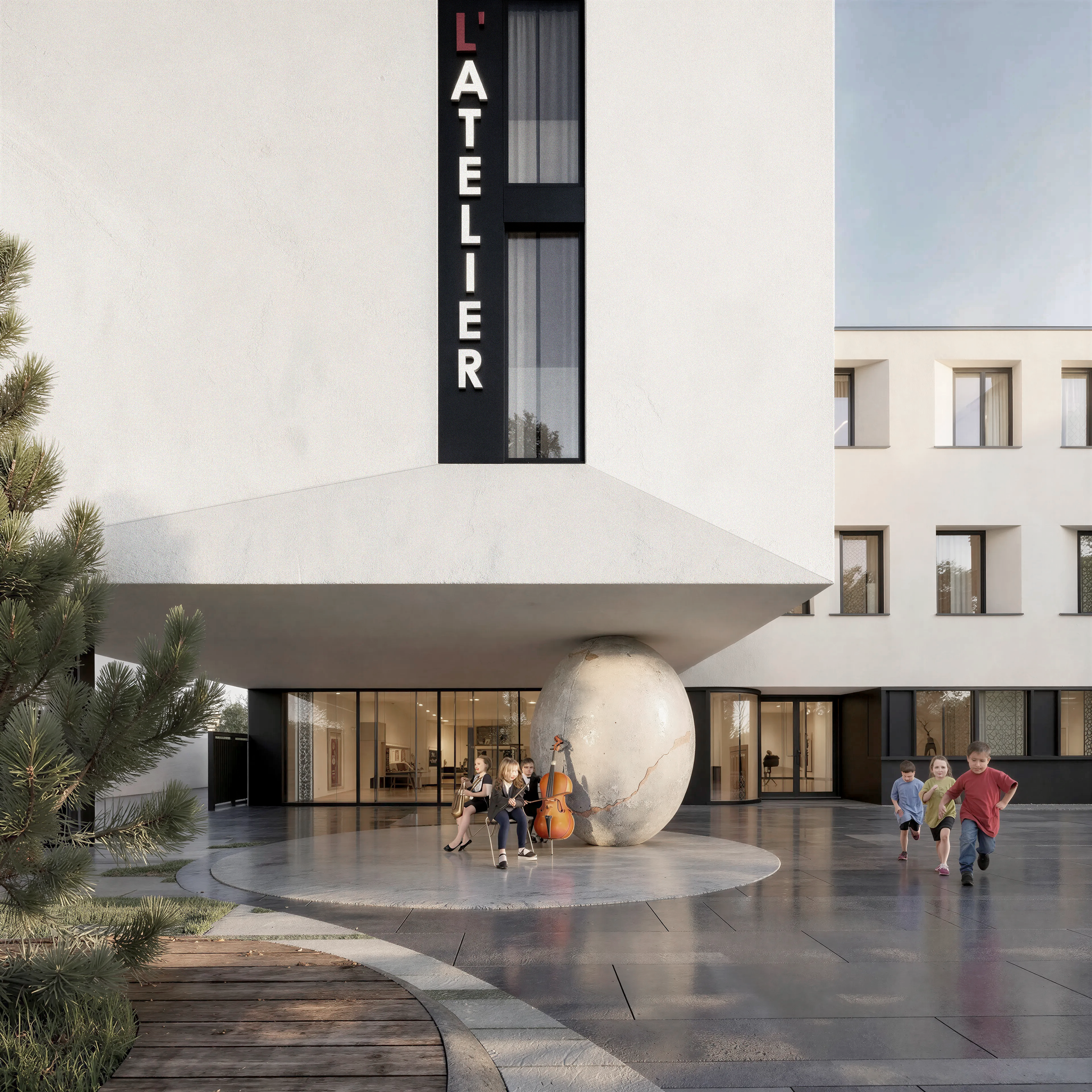
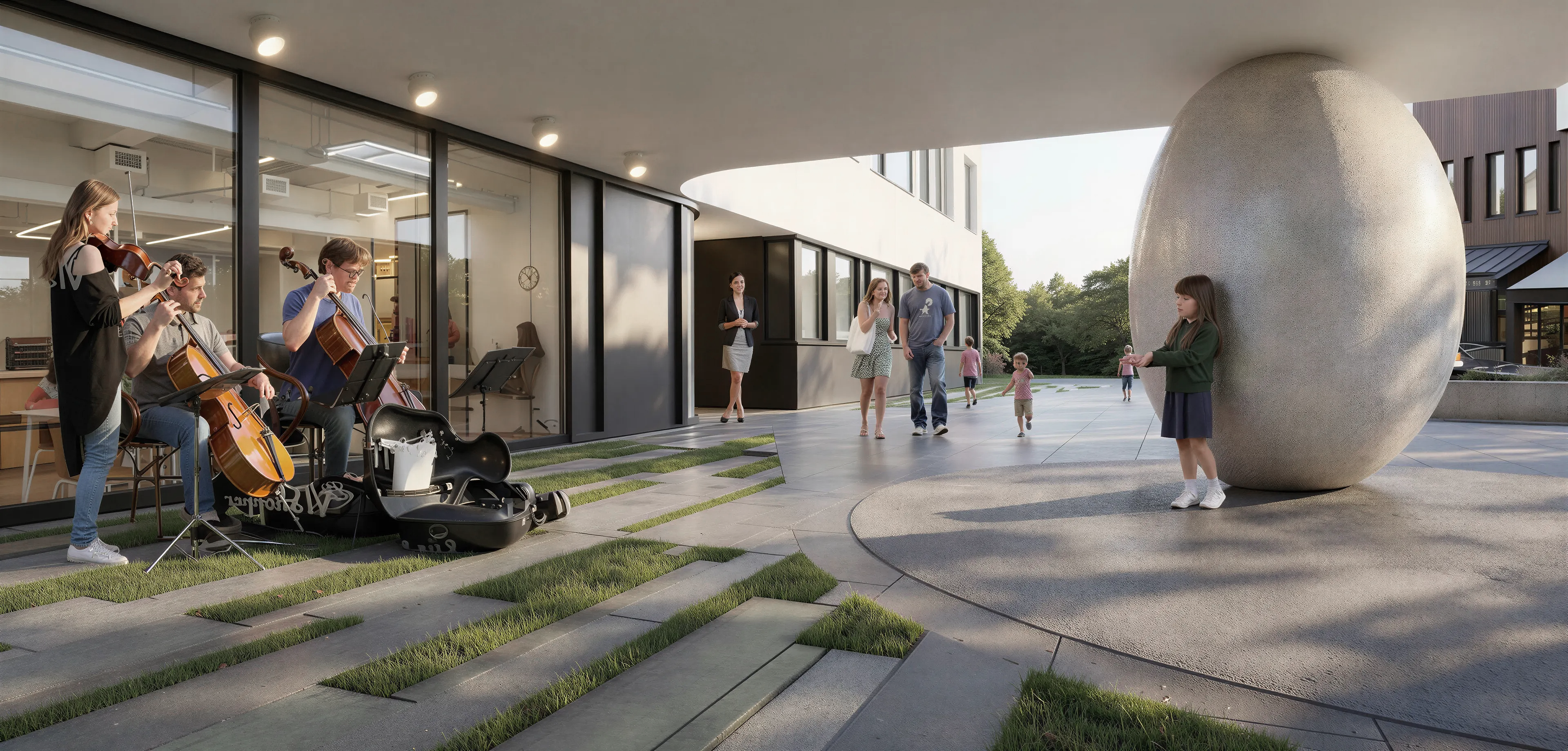
Building upon the symbolic potency of the ovoid in Brancusi’s sculptural language, the egg-like form effortlessly sustaining the cantilevered upper floors of L’ ATELIER building can be further interpreted as an emblem of raw potential—an unshaped essence awaiting definition. In the context of education and childhood development, Brancusi’s ovoid sculptures take on an added layer of significance: they become metaphors for the formative state of the young mind, malleable and open, yet containing the innate blueprint of growth and transformation. Just as Brancusi sought to strip away the superfluous to reveal the purity of form, the educational process can be seen as a shaping of raw material—children—toward their fullest expression, ideally without distorting the inner nature they already possess.
The smooth, uninterrupted curves of the L’ ATELIER EGG suggest a protective shell, a nurturing boundary, within which complexity develops. This mirrors the role of educational institutions as both incubators and sculptors of human potential. Brancusi’s emphasis on the reduction to essence—on revealing rather than imposing—offers a poignant counterpoint to contemporary pedagogical systems that often prioritize conformity over individual essence. His work reminds us that true formation is not about molding in rigid templates, but about cultivating the intrinsic qualities within the “formless” child, much like his sculptures emerge not from invention but from revelation. Thus, Brancusi’s ovoid phase not only revolutionized the aesthetics of form, but also invites a deeper philosophical meditation on the shaping of identity—suggesting that education, like sculpture, should be an art of gentle unveiling rather than aggressive construction.
Year
2022
Location
Navodari, Romania
Creative Director
Letitia Pescariu